How to Choose a Compact Refrigerator
Match capacity to your use: under 2 cu ft for a desktop or dorm room, 2 to 4 cu ft for an office or guest room, and 4 cu ft or more if you need a genuine second refrigerator. Then choose a compressor model if noise and temperature consistency matter, or a thermoelectric model if silence and portability are the priority.

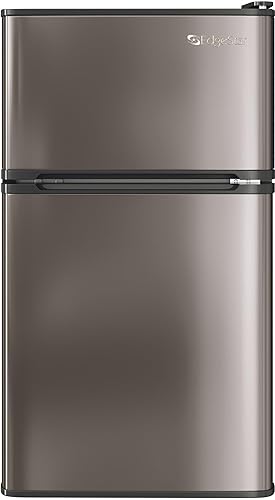

Start With Capacity and Placement
The compact refrigerator category covers everything from a 0.64 cu ft thermoelectric unit sitting on a nightstand to an 11.5 cu ft freestanding model that rivals a full-size apartment fridge. Before you look at brands or features, measure the footprint and the clearance you have available. A 3.2 cu ft model such as the Euhomy CRF006-31 is 19.4 x 18.1 x 33.5 inches, while a desktop thermoelectric like the Cooluli CL4LBK is only 7.7 x 10.2 x 10.5 inches and weighs under 2 lb. Freestanding models need an inch or two of airflow on the sides and back, so never plan to slide one flush into a cabinet unless it is rated for built-in installation. If your spot is truly countertop-only, stick to compact units rated for countertop or tabletop use.
Compressor vs. Thermoelectric vs. Absorption Cooling
Compressor cooling is the same technology used in full-size refrigerators. It is the most energy-efficient over time, reaches colder temperatures consistently (typically 35 to 45 degrees Fahrenheit), and is the right choice for storing food, beverages, or anything that must stay at a precise temperature. The tradeoff is a faint compressor hum and slightly more vibration. Thermoelectric cooling uses a solid-state module with no moving parts, so it runs silently and vibration-free, which is why it is popular for bedrooms and skincare storage. The limitation is that thermoelectric units can only cool about 20 to 40 degrees below the ambient room temperature, so a warm dorm room in summer will limit how cold they actually get. Absorption cooling, found on models like the Smad DW30CAE and several Smeta units, is also silent and can run on 12-volt DC power, making it a good fit for RV or hotel use, but it is slower to cool and less efficient than a compressor at home. When food safety is the goal, choose a compressor model.
Manual Defrost vs. Automatic Defrost
Manual defrost units require you to unplug the refrigerator and let ice build-up melt away every few weeks or months, depending on humidity and how often the door is opened. They are simpler, quieter, and typically less expensive, but the maintenance is a real chore. Automatic defrost cycles the compressor to prevent frost accumulation without any action on your part. Several Danby models across the 3 to 4.4 cu ft range offer automatic defrost at price points between $240 and $460, which is a reasonable premium for the convenience. Frost-free designs, found on some Koolatron and Galanz units, go a step further by using a fan to circulate air and prevent frost entirely. If the refrigerator will be used daily for food storage and you do not want to think about maintenance, automatic defrost is worth paying for.
Door Configuration and Hinge Direction
Single-door compact refrigerators are the most common, but some models include a separate small freezer compartment behind the same door or as a second door on top. The Galanz GLR31TWEER, for example, is a 3.1 cu ft two-door freezer-top model at around $487 that fits comfortably in a kitchen corner. If you need to store ice cream or frozen meals, look specifically for a two-door model with an independent freezer section rather than a single-door unit with a small ice compartment, which rarely gets cold enough for long-term frozen storage. Pay attention to hinge direction as well. A door that swings the wrong way in a tight space forces you to reach around it every time. Many models list the door as reversible, meaning you can swap the hinge yourself with basic tools, which is a practical feature worth seeking out for under-counter or against-the-wall installations.
Price Range and What Changes at Each Tier
At $25 to $80, you get small thermoelectric units from brands like Cooluli, Curtis, and Koolatron. These hold a handful of cans or a few skincare items and are not meant for food safety at room temperature above 75 degrees. From $130 to $250, compressor-based models with 1.6 to 3.2 cu ft of storage become available from Galanz, Igloo, and Danby, and this is where the value is sharpest for dorm rooms and offices. Between $300 and $500 you get larger compressor units in the 3 to 4.4 cu ft range with reversible doors, automatic defrost, and better interior layouts, including the EdgeStar CRF321SS at $329 with stainless steel finish and 4 shelves. Above $500, you move into commercial-adjacent brands like NewAir, Avallon, and Zephyr that offer built-in installation compatibility, forced-air cooling, precise digital temperature controls, and finishes that hold up in a kitchen or bar setting.
Noise, Energy Use, and Practical Extras
If the refrigerator will sit in a bedroom or home office, compressor noise is worth researching before you buy. Most compressor units operate in the 30 to 45 decibel range, which is comparable to a quiet library or a soft conversation. Thermoelectric models produce no compressor sound at all, which is a meaningful quality-of-life difference in a sleeping space. Energy use matters less at small capacities, but an ENERGY STAR rating guarantees the unit has passed efficiency testing. Check whether temperature control is dial-based or digital: dial controls are less precise and can drift, while digital panels let you hold a specific degree setting. A reversible door, adjustable shelves, and an interior light are small details that add up to a noticeably better daily experience.
Common mistakes to avoid
- Buying by exterior looks without measuring the actual interior cubic footage, then finding it holds far less than expected.
- Choosing a thermoelectric model for food storage in a warm room, where it may only reach 55 to 60 degrees Fahrenheit and cannot safely store perishables.
- Ignoring door swing direction and pushing the unit against a wall that blocks the door from opening fully.
- Picking a single-door unit with a small ice compartment and expecting it to keep frozen food at 0 degrees -- it typically holds around 15 to 25 degrees at best.
- Skipping automatic defrost to save money, then letting ice build up until it reduces usable space and strains the compressor.
- Not leaving airflow clearance around a freestanding compressor unit, which causes it to run hot, work harder, and wear out faster.
Frequently asked questions
What size compact refrigerator do I need for a dorm room?
A 1.7 to 3.2 cu ft compressor model is the practical range for a dorm room. It holds a week of drinks, snacks, and basic perishables without dominating the floor space. The Danby DAR017A2BDD at 1.7 cu ft weighs 42 lb and fits under a standard desk. If you also want a small freezer section, step up to a two-door model in the 3 cu ft range.
Are thermoelectric mini fridges good for skincare?
Yes, with a caveat. Thermoelectric units run silently and without vibration, which is ideal for a bedroom or vanity. They keep products cool rather than cold, typically landing 20 to 30 degrees below room temperature. In a 70-degree room, that means roughly 40 to 50 degrees inside, which is fine for serums, face masks, and moisturizers. Do not use them to store anything that requires strict refrigeration, such as certain medications or opened food.
Can I use a compact refrigerator as a second fridge in my garage?
A compressor-based model can work in a garage, but check the rated operating temperature range first. Many compact units are rated for indoor environments between 50 and 90 degrees Fahrenheit. In an unheated garage during winter, or a hot garage in summer, performance can suffer and some compressors will cycle incorrectly. Models with a wider ambient temperature tolerance, often listed as a garage-ready or extended-range feature, are more reliable for outdoor structures.
What is the difference between a mini fridge and a compact refrigerator?
The terms are used interchangeably in retail, but compact refrigerator is the broader category. Mini fridge typically describes the smaller end of the spectrum, usually under 2 cu ft with a single door, while compact refrigerator can refer to units as large as 11 or 12 cu ft. For buying purposes, focus on the exact cubic footage and configuration rather than which label the listing uses.
How long do compact refrigerators last?
A well-maintained compressor-based compact refrigerator typically lasts 8 to 12 years, which is similar to a full-size refrigerator on a shorter power cycle. Thermoelectric units have no moving parts to wear out but can see module degradation after 5 to 7 years of continuous use. The biggest longevity factors are keeping the condenser coils clear of dust and not blocking airflow around the unit. Questions? Reach us at [email protected].